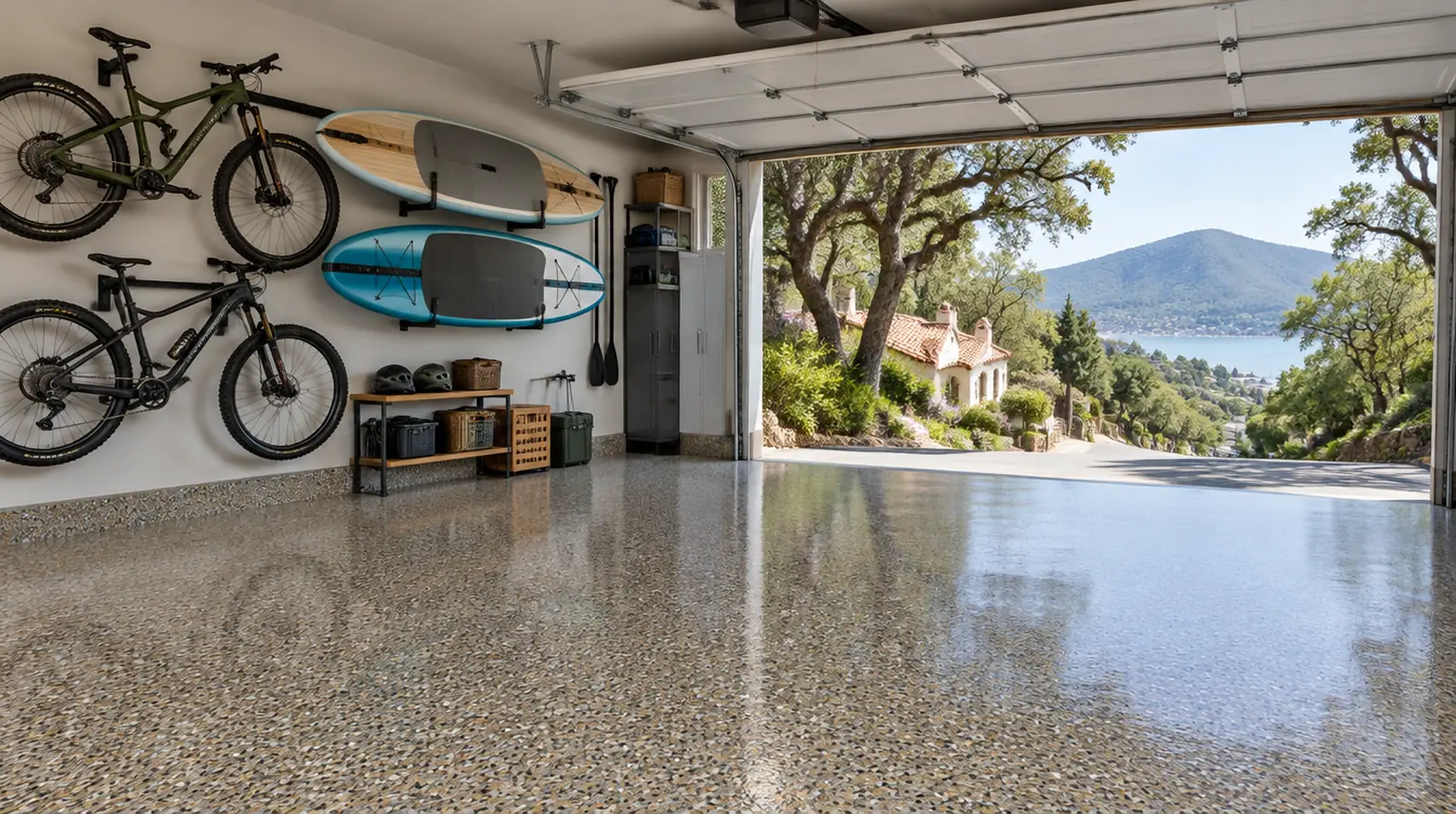
Why flake floors are so popular
A flake floor is an epoxy or polyaspartic base coat with colored vinyl chips broadcast into it until the surface is completely covered. Once it cures, we scrape off the loose chips, sand the surface smooth and seal it with a clear topcoat. The result looks a bit like granite or terrazzo, and it is extremely forgiving. The pattern hides dust, small scratches, tire marks and the fine silt that blows into hillside garages after a storm. The texture of the chips gives better traction than a smooth solid color, especially when the floor is wet.
For most families in San Rafael, that combination of looks, grip and low maintenance makes a flake floor the easy choice. It suits the garage that holds two cars and a pile of outdoor gear, the basement playroom, the laundry area and the side workshop where things get messy. It also works well in commercial spaces like auto shops, salons and break rooms.
How a flake floor is built
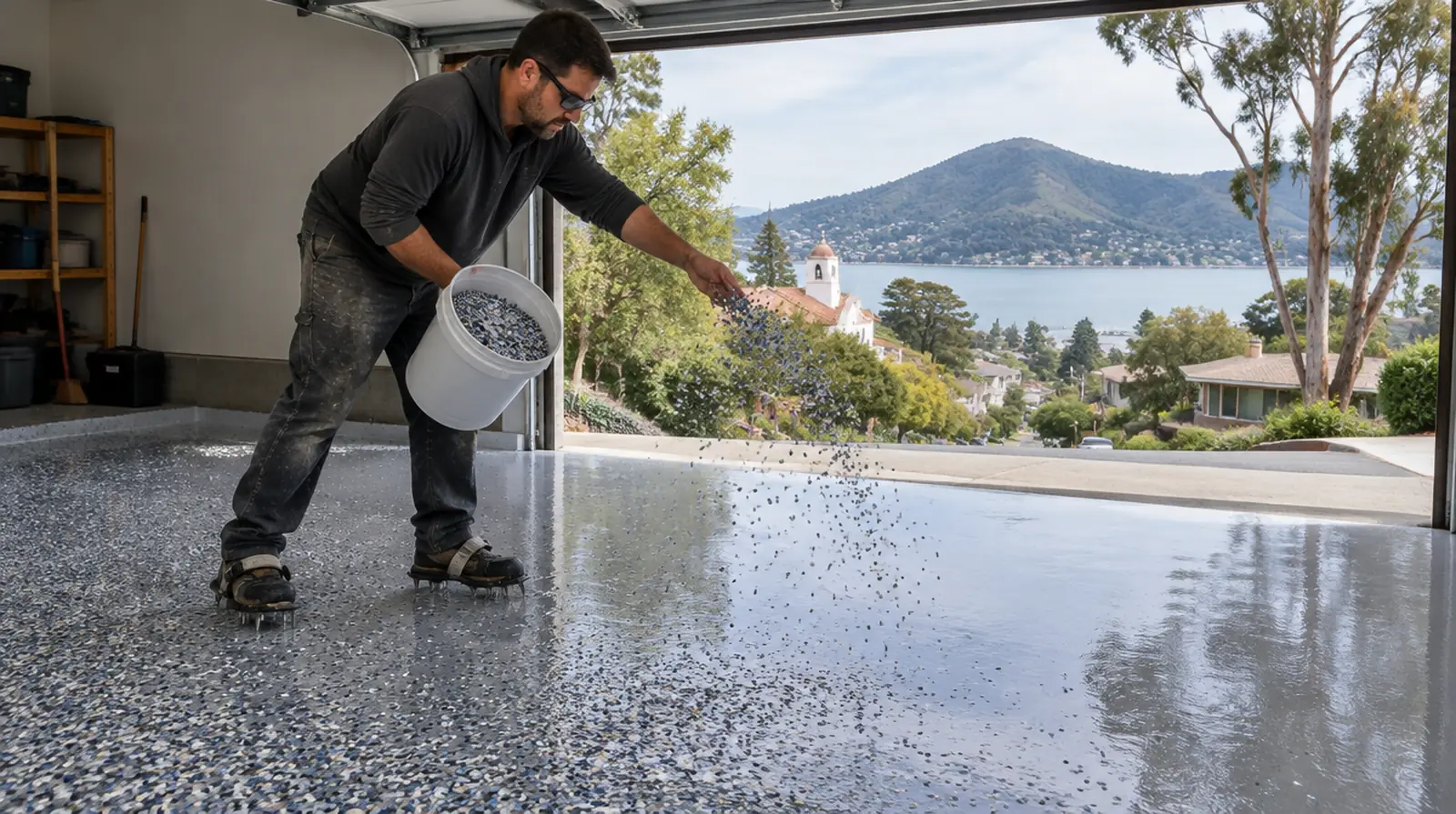
Preparation is the same as for any quality coating. We diamond grind the slab with dust control, repair cracks and chips and vacuum the floor thoroughly. Then we roll out a pigmented base coat that matches the overall color of the blend. While it is still wet, we broadcast the flakes by hand, working in sections so every inch is covered. Full broadcast means we keep adding chips until no wet base shows through, which builds a thicker, stronger floor than a light sprinkle.
After the base cures we scrape and sand away loose and standing flakes, vacuum again and apply one or two clear topcoats. The topcoat locks in the chips, sets the final sheen and adds chemical and UV resistance. Most flake garages are done in one or two days, depending on the base material and the weather.
Choosing a blend
There are dozens of flake blends, from quiet grays and beiges to bold mixes with blue, red or bright white chips. Grays and charcoals are popular with modern and mid-century homes. Warm tans and browns look natural next to wood cabinets and suit older Mission-style houses. Lighter blends make a dim garage feel bigger and brighter. We bring sample boards to the estimate so you can see the colors in your own light, since a blend can look very different on a cloudy morning than under shop lights.
Chip size matters too. Standard quarter-inch flakes give a classic speckled look. Smaller chips produce a finer, more stone-like pattern. Mixing sizes is possible, and we can adjust the topcoat texture if you want more or less grip.
Built for wet weather and steep drives
Hillside garages often have a steep apron and a door that faces the downhill rush of water during winter rain. Wet tires, boots and dogs bring that water inside. A flake floor handles it well: the texture gives footing, the pattern hides drying marks and the sealed surface keeps water from soaking into the slab. If the floor tends to stay damp, we may add a fine grit to the topcoat for extra traction and pay close attention to the threshold where most of the water enters.
Flake over moist slabs
Slabs near the bay or the canal can hold more moisture than you might expect. We measure it on every job. When readings run high, we use a moisture-tolerant primer under the flake system, which helps prevent the bubbles and peeling that plague coatings applied over damp concrete. If the moisture is beyond what any primer can handle, we will tell you and suggest alternatives.
Epoxy or polyaspartic base
Flake floors can be built with an epoxy base and a polyaspartic topcoat, or entirely with polyaspartic. Epoxy bases give long working time and excellent bonding. Polyaspartic systems cure fast, often allowing a one-day install, and they resist UV yellowing very well. We explain the pros and cons of each during the estimate and recommend the one that best fits your slab, your schedule and your budget.
Where flake floors work best
We install flake systems in garages, basements, laundry rooms, mudrooms, workshops, storage units, gyms, kennels and many commercial back-of-house spaces. They are less suited to large showroom floors where a perfectly uniform look matters, and to exterior areas in full sun unless the topcoat is designed for it. For outdoor surfaces we usually recommend a dedicated driveway coating or concrete sealing.
Caring for a flake floor
Maintenance is minimal. Sweep or use a dust mop to remove grit, and mop with warm water and a gentle cleaner. A soft deck brush helps in textured areas. Avoid harsh acids and strong solvents. Use mats where cars drip and pads under heavy toolboxes or gym equipment. If the topcoat ever dulls after years of heavy use, it can be lightly sanded and recoated without redoing the whole floor.
Questions
Will the flakes come loose?
No. They are locked into the base and sealed under clear topcoats.
Is a flake floor slippery?
It has natural texture, and we can add grit to the topcoat for more grip.
How long before I can park?
Usually one to three days, depending on whether the base is polyaspartic or epoxy.
Want to see blends in person? Book a free estimate and we will bring samples.
Get your flake floor estimate
Call (628) 304-0751 for a free estimate.