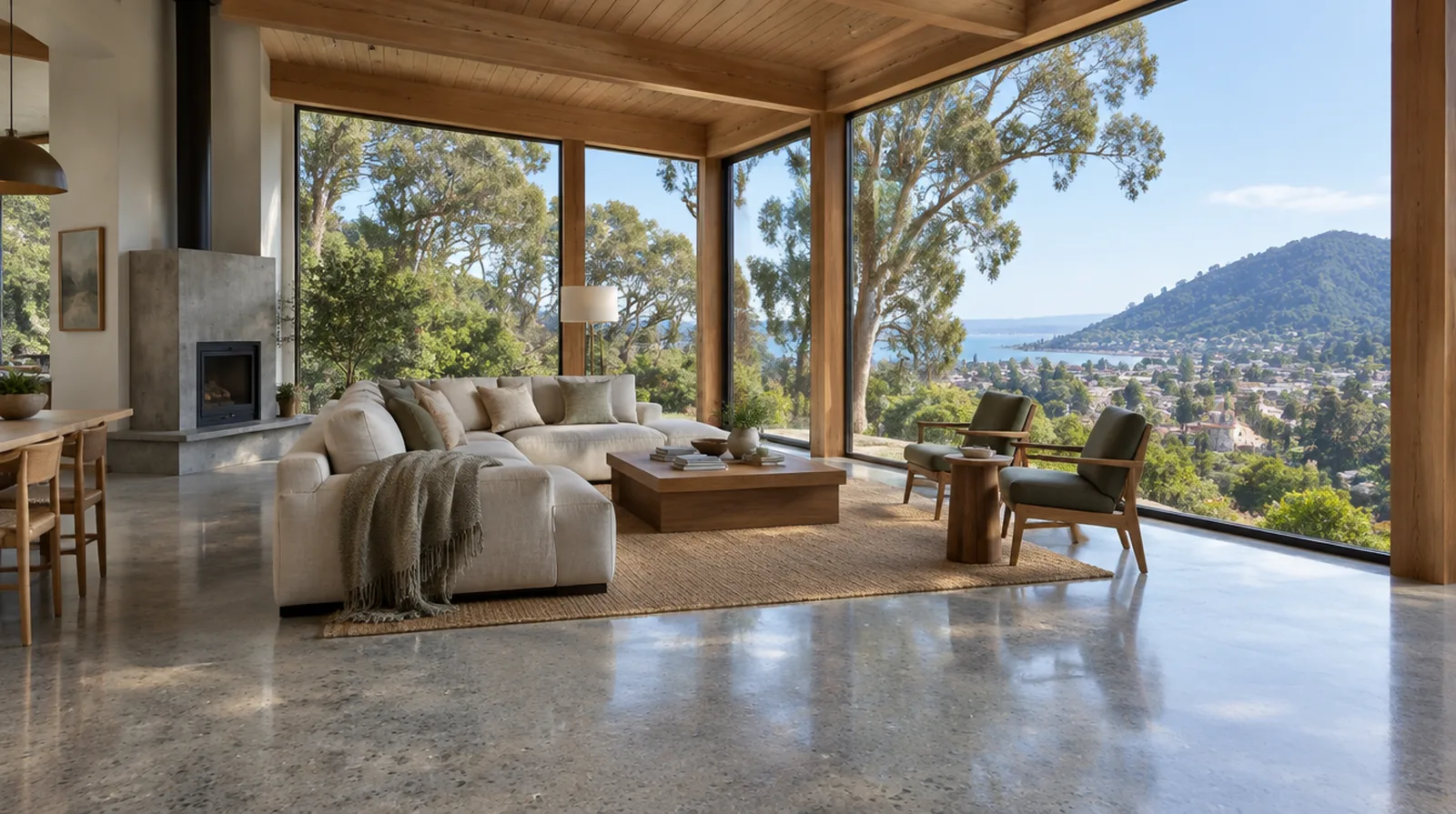
What polished concrete is
Polished concrete is not a coating. Instead of adding a layer on top, we grind the slab itself with a sequence of progressively finer diamond tools, harden it with a chemical densifier and polish it until it reflects light. The result is a dense, smooth surface that is part of the concrete, so there is nothing to peel or flake. A guard or sealer protects it from stains, and the finish can range from a soft matte to a mirror-like gloss.
Polished floors have become popular in modern homes, remodels, offices, galleries, retail stores, restaurants and studios. They suit the clean lines of mid-century and contemporary architecture common on the hills, and they bring an industrial edge to storefronts and lofts downtown.
Choosing the look
The main decision is how deep to grind. A light grind exposes only the cream on top for a smooth, uniform look. A medium grind reveals fine sand and some small stones, which many people describe as salt and pepper. A deep grind exposes larger aggregate for a terrazzo-like effect. Each slab has its own character, with natural variation, old marks and color shifts. We show test patches so you can see what your concrete will look like before we commit.
Next you choose the sheen, from a low satin to a high gloss. Higher gloss reflects more light, which brightens dim interiors. Lower sheens hide scratches and feel softer. Dyes and stains can add color, from warm earth tones to deep charcoal or even bold accents.
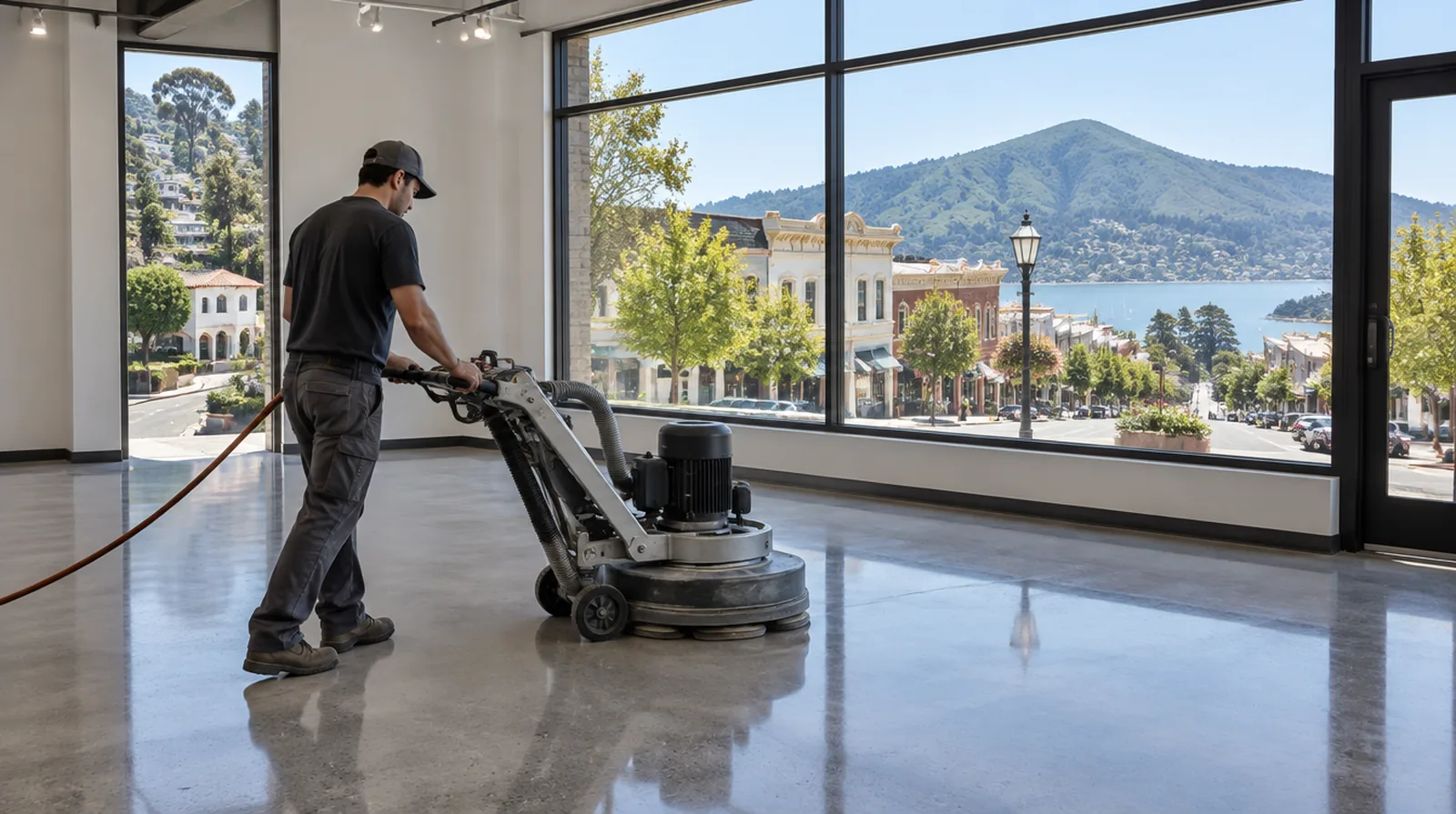
How the process works
We start by evaluating the slab for cracks, patches, old adhesive and flatness. We diamond grind with dust collection, starting with coarse metal-bond tools and working up through finer grits. After the early passes, we fill cracks and pinholes with a grout or color-matched filler. A lithium or silicate densifier soaks into the concrete and reacts to harden the surface. Then we continue with resin-bond diamonds to build the shine. Finally we apply a penetrating guard and burnish it.
Benefits for homes
Polished concrete is extremely durable, easy to clean and works beautifully with radiant floor heat, since the slab stores warmth and releases it slowly. It has no grout lines or seams to trap dirt, and it does not harbor dust mites or allergens the way carpet can. In houses with big windows and natural light, a polished floor bounces light deeper into the room. Paired with rugs and wood furniture, it feels warm rather than cold.
Benefits for businesses
For retail, offices and restaurants, polished concrete offers a long-lasting floor with low maintenance costs. There is no wax to strip, no coating to recoat every few years and nothing to peel under carts or chairs. It looks clean and modern and stands up to heavy foot traffic. Many businesses choose it to keep the industrial character of older buildings while making the space feel finished.
Is your slab a good candidate?
Most interior slabs can be polished, but results vary. Slabs with heavy patching, deep cracks or significant damage may show those flaws clearly. Old adhesives and coatings must be removed first, which adds time. Concrete that is too soft can be densified, but very weak slabs may be better suited to a coating. During the estimate we inspect the floor and give you an honest opinion. If polishing is not a good fit, we can suggest a coating or metallic finish instead.
New construction and remodels
If you are building or remodeling, plan for polishing early. We can advise your builder on concrete mix, finishing and protection during construction so the slab is ready for a great polish. Protecting the floor from paint, plaster and drywall mud during the build saves time and money later.
Moisture and polished floors
Polished concrete breathes, which is a real advantage in a town with wet winters and slabs that sit near groundwater. Moisture moving up through the slab can escape without lifting anything, so there is no risk of bubbling or peeling. That makes polishing a strong option for some floors that would be risky to coat.
Maintenance
Dust mop daily in busy areas and clean with a pH-neutral cleaner. Wipe up acidic spills such as wine, citrus and vinegar quickly, since they can etch the surface if left. Every few years, depending on traffic, a light re-burnish and fresh guard restore the shine. That is far less upkeep than most floor coverings.
Questions
Is polished concrete slippery?
Dry polished concrete has good traction. Wet floors can be slick, so mats near entries help.
Will it look perfectly uniform?
No. Natural variation is part of the look, and we show test areas first.
Can you polish a garage?
Yes, though garages with oil stains often look better with a coating.
Wondering what your slab could become? Book a free estimate and test patch review.
Get a polished concrete quote
Call (628) 304-0751 for a free estimate.